Limited availability left for the 2026 charter season. Inquire to secure your spot!Limited availability left for the 2026 charter season. Inquire to secure your spot!

A Day at Sea in Greece

Guided by geography rather than schedules, yachting in Greece moves through swim-ready mornings, scenic passages, and balanced nights ashore or at anchor.
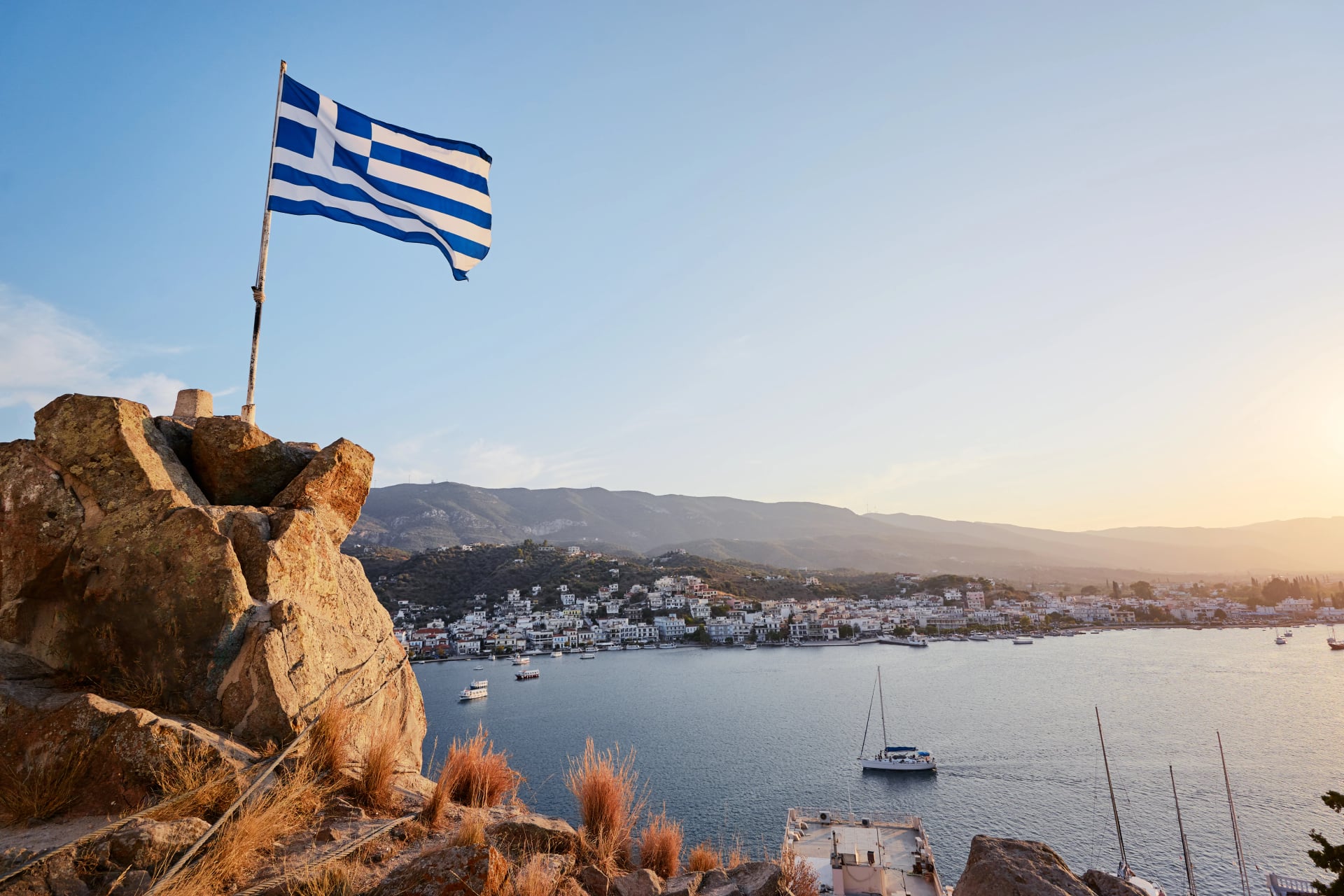
Hero Image

Yachting in Greece follows a natural rhythm shaped by geography rather than schedules. Hundreds of islands, short cruising distances, reliable summer winds, and deep-rooted maritime culture make each day fluid and unforced. The experience is less about moving fast and more about moving well—anchoring where land, light, and water align.

Whether sailing the Cyclades, the Ionian, the Saronic Gulf, or the Dodecanese, the structure of the day remains reassuringly simple, while the scenery constantly evolves.

Morning: Calm Waters and a Slow Start
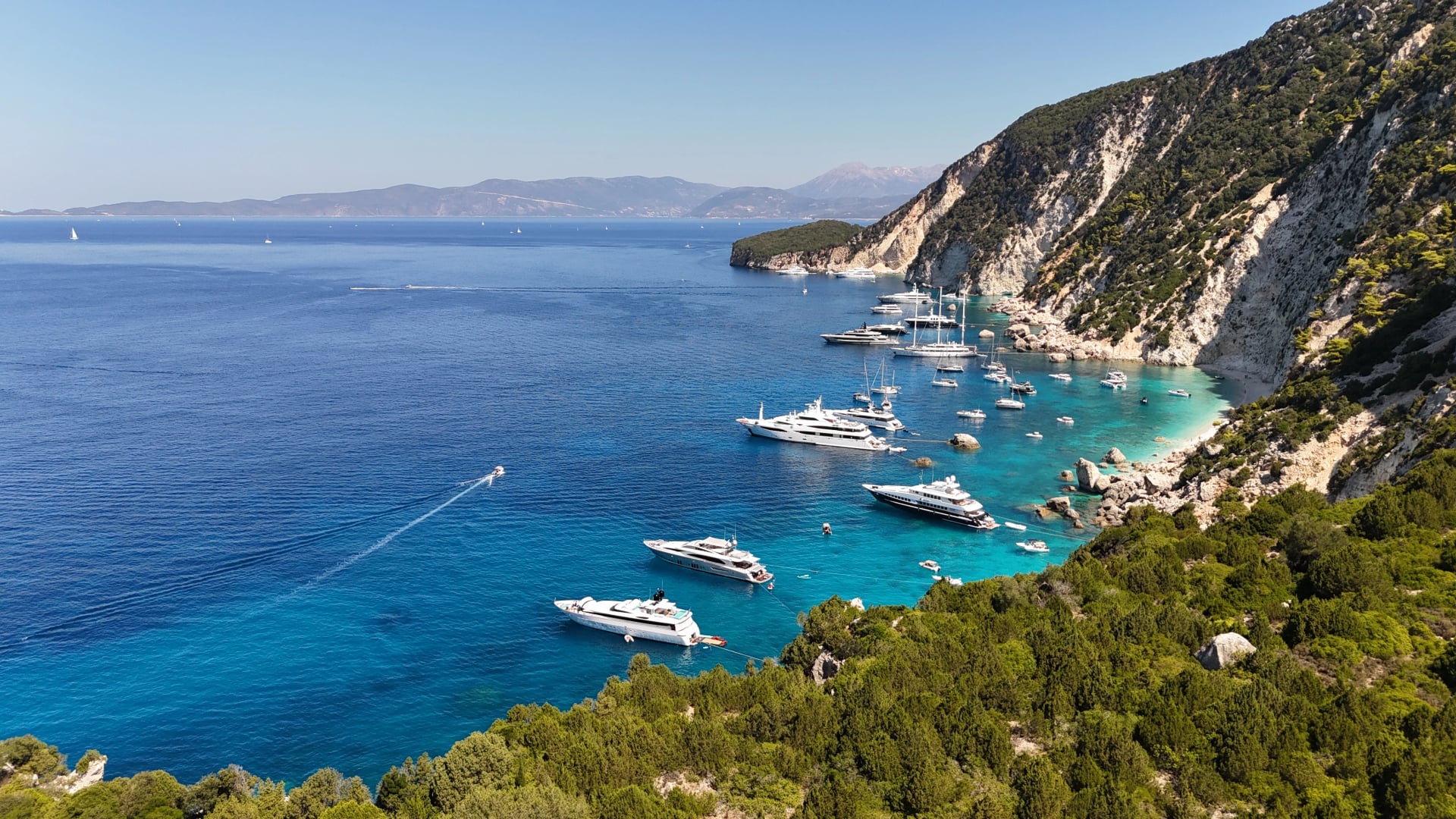
Drone pictures of the stunning beaches of Ithaka and Kefalonia on the Greek Ionian Islands in the blue Mediterranean sea
Sheltered bays set the pace, where mornings feel private and the day unfolds gradually

Most days begin at anchor, well before harbors come alive. The yacht rests in a protected bay—perhaps off Kythnos’ Kolona Beach, the fjord-like coves of Meganisi, or the turquoise shallows of Elafonisos. Morning swims are unhurried and private. The water is at its clearest, the light still soft, and the temperature ideal.

Breakfast follows on deck: fresh fruit, Greek yogurt with honey, warm pastries, and espresso prepared as the coastline quietly wakes.

Plans are discussed casually with the captain. Short hops are typical in Greece, often under two hours, allowing the day to stay open-ended.

Mid-Morning: Sailing Between Islands
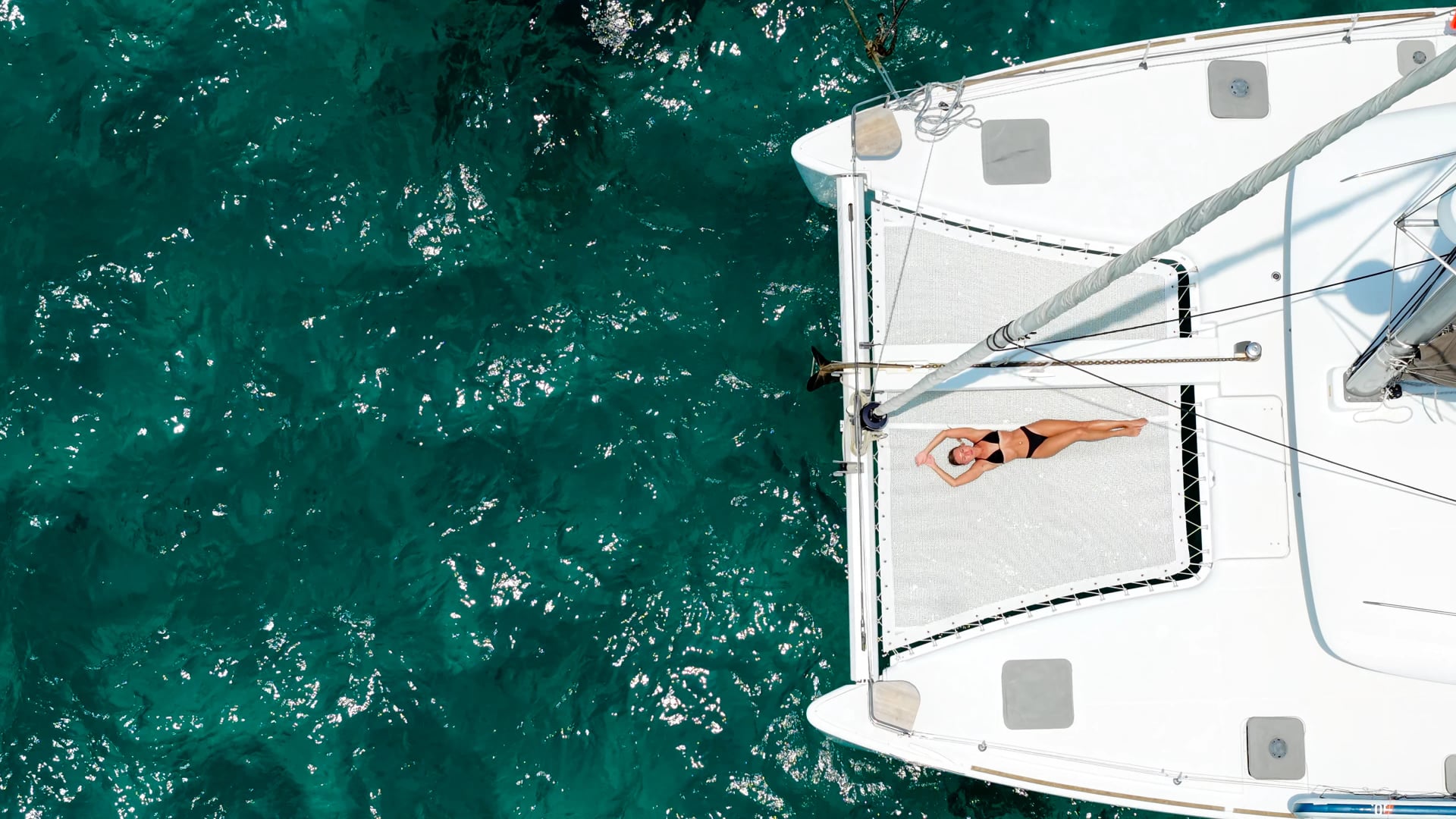
Slender woman on a yacht. Beautiful white woman sunbathing on the bow of a snow-white sailing yacht in the tropics. Yachting concept in a hot country. Holidays on a catamaran.
Movement is gentle here—time on deck matters as much as the destination ahead

As the yacht gets underway, Greece reveals its defining advantage—density. Islands appear quickly, each with a distinct character.

In the Cyclades, whitewashed villages rise sharply from deep blue water. In the Ionian, the palette shifts to green hills and limestone cliffs. The Saronic Gulf blends island calm with mainland history, while the Dodecanese feels expansive, layered, and quietly monumental.

This is the ideal time for light activity: paddleboarding in calm bays, snorkeling over rocky reefs, or simply remaining on deck as the yacht glides between destinations.

Lunch: Regional, Fresh, Unrushed
Image
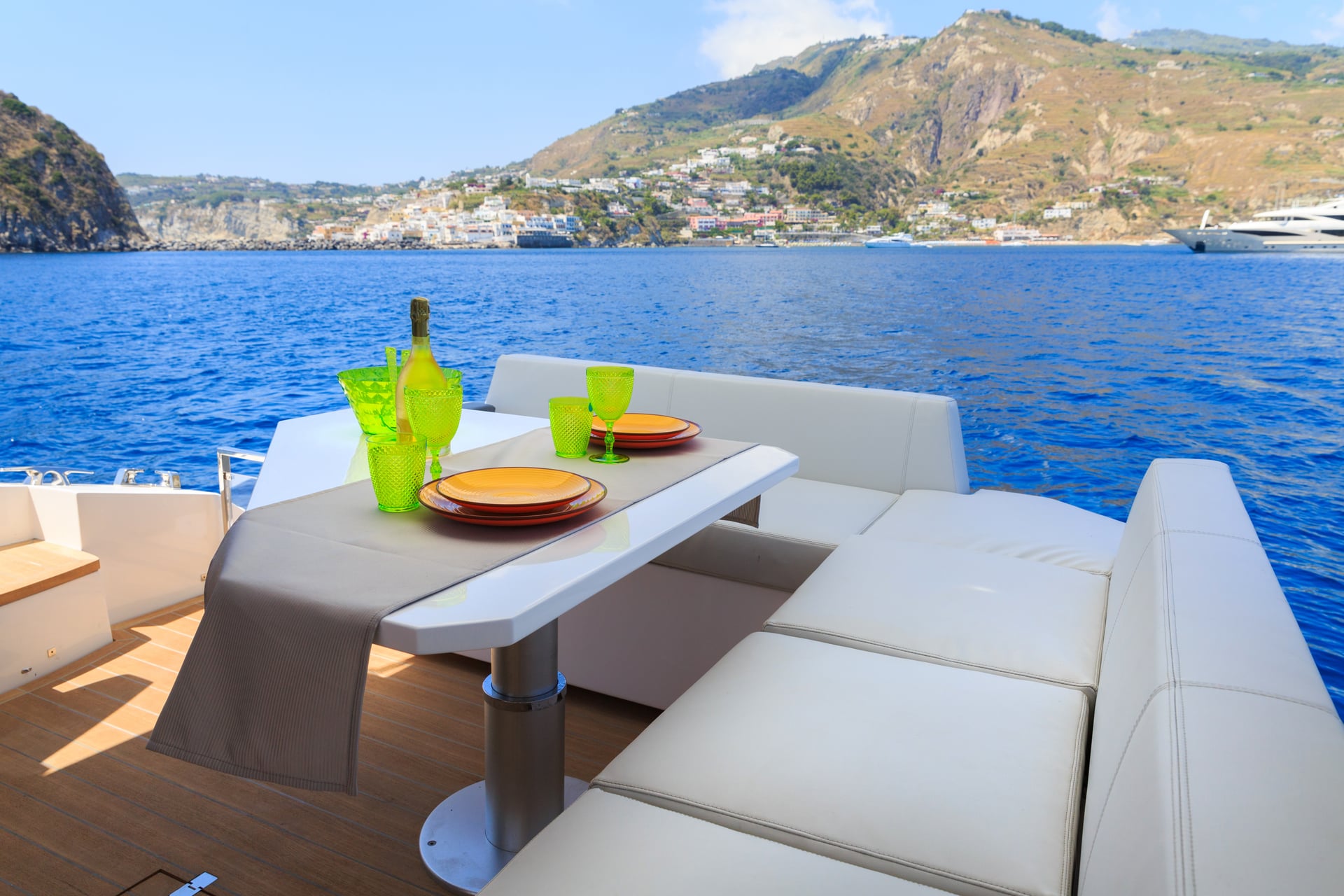
Midday pauses are intentional—simple plates, chilled whites, and no reason to rush the coastline

Lunch is typically served at anchor or while drifting slowly along the coast. Greek yachting cuisine is simple, seasonal, and precise—grilled fish, octopus salad, lemon-dressed vegetables, fresh bread, and chilled Assyrtiko or Robola.

On Cyclades routes, lunch might follow a swim in the volcanic caves of Milos. In the Ionian, it often comes after a stop at Anti-Paxos’ impossibly blue waters. There is no rush. Distances are short, and afternoons are intentionally spacious.

Afternoon: Ashore or Afloat
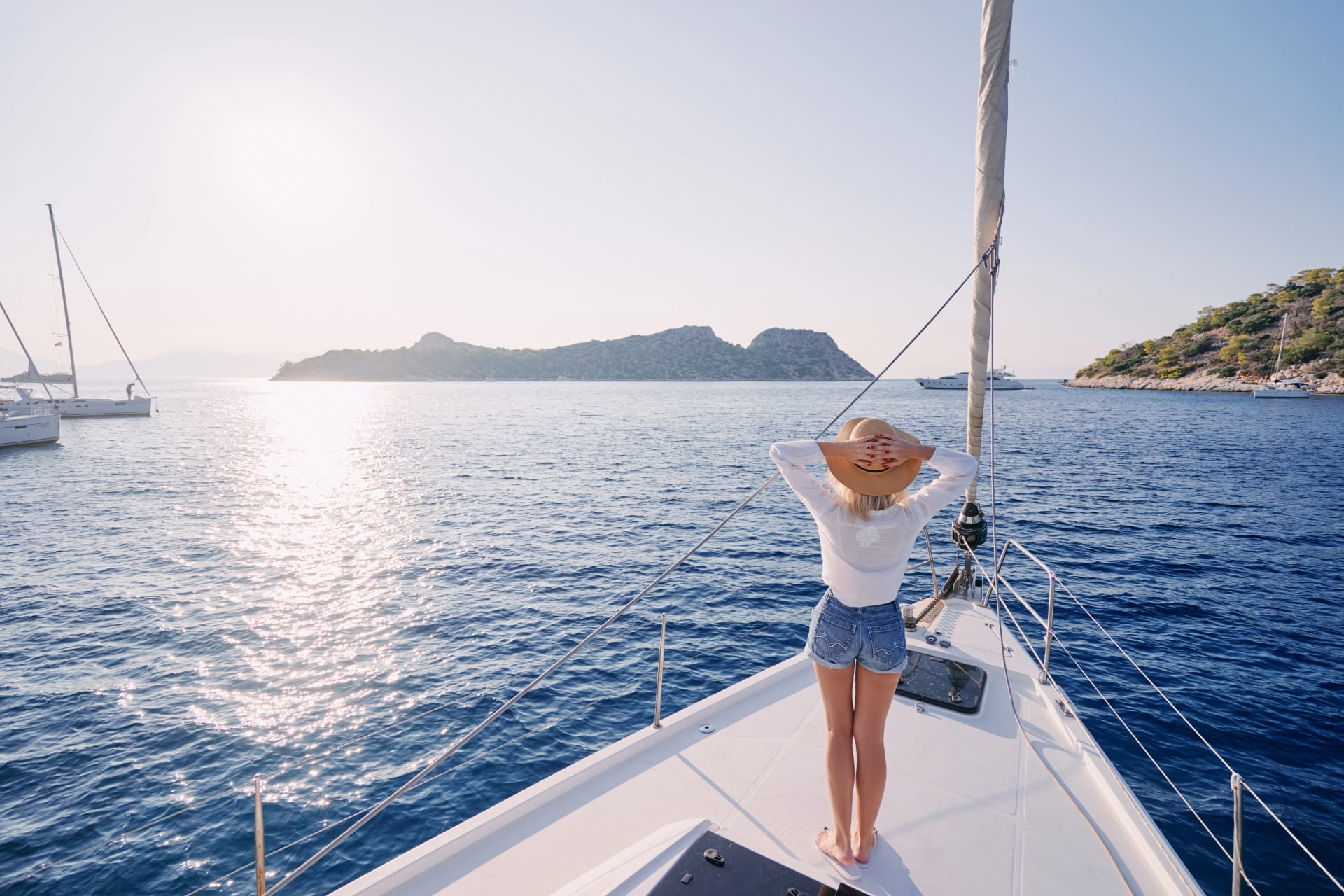
Luxury travel on the yacht. Young happy woman on boat deck sailing the sea. Yachting in Greece.
The luxury lies in optionality: explore lightly or remain exactly where you are

Afternoons offer choice rather than obligation.

Some days invite exploration ashore:

  • Walking Hydra’s car-free harbor

  • Climbing Monemvasia’s medieval citadel

  • Visiting the Acropolis of Lindos

  • Wandering Nafplio’s Venetian old town beneath Palamidi Fortress

Other days reward staying on board—reading in the shade, swimming again, or resting as the yacht repositions for the evening anchorage. Greece accommodates both instincts equally well.

Sunset: The Defining Hour
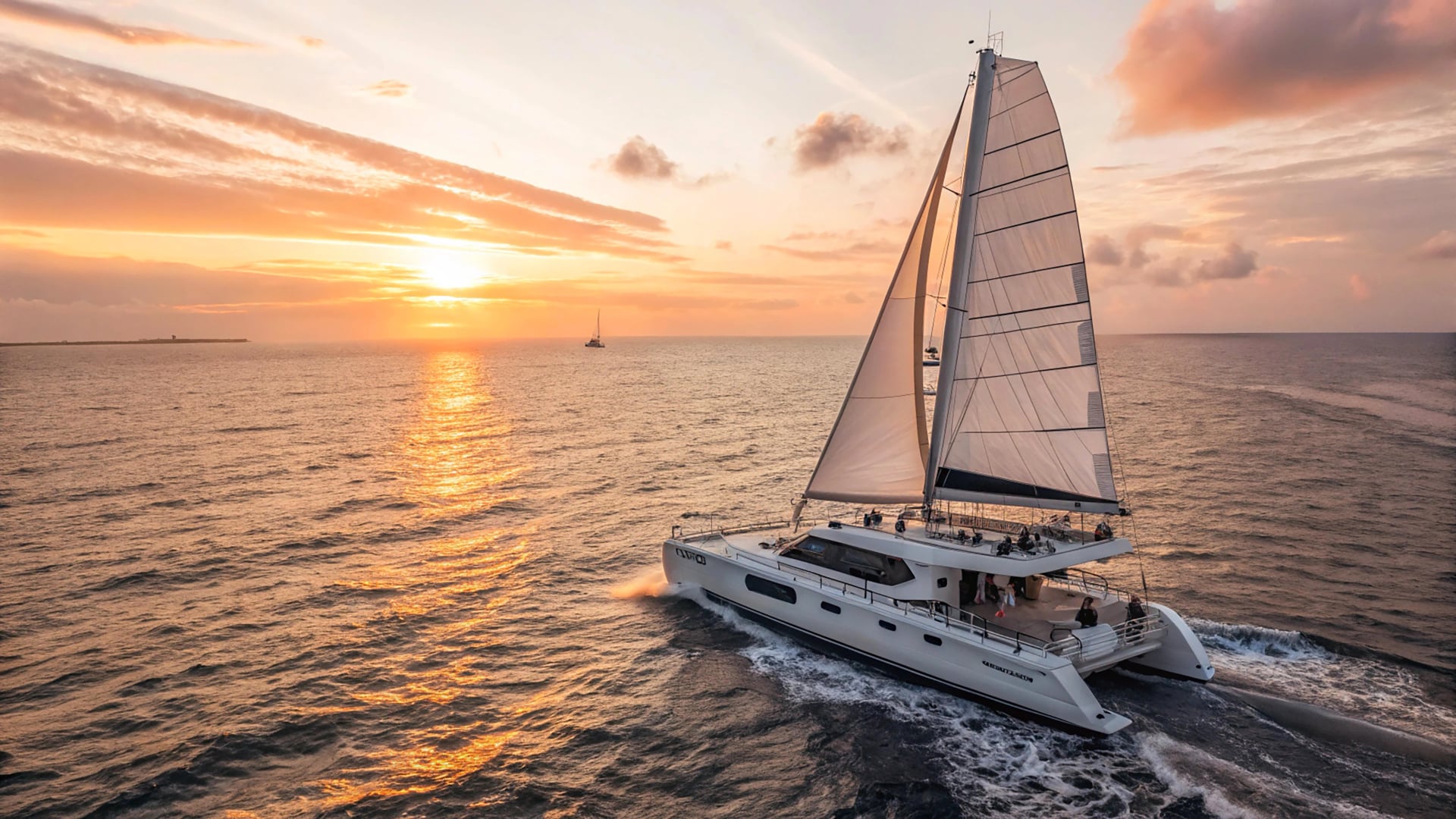
wide-angle sleek catamaran motor yacht gracefully slicing through sparkling ocean, its white sails billowing in gentle breeze as sun began to set on a balmy summer evening
Sunset resets the pace. Movement slows, routes soften, and the day resolves at sea rather than on shore

As light softens, yachts typically move closer to town or settle into a carefully chosen anchorage. This is where Greece excels.

Sunsets below Santorini’s caldera, in Fiskardo’s pastel harbor, or beneath the cliffs of Oia are not background moments—they define the day. Aperitifs are served on deck, the air cools, and the sea calms. Movement slows noticeably.

Dinner: Harbor Nights or Private Anchorages
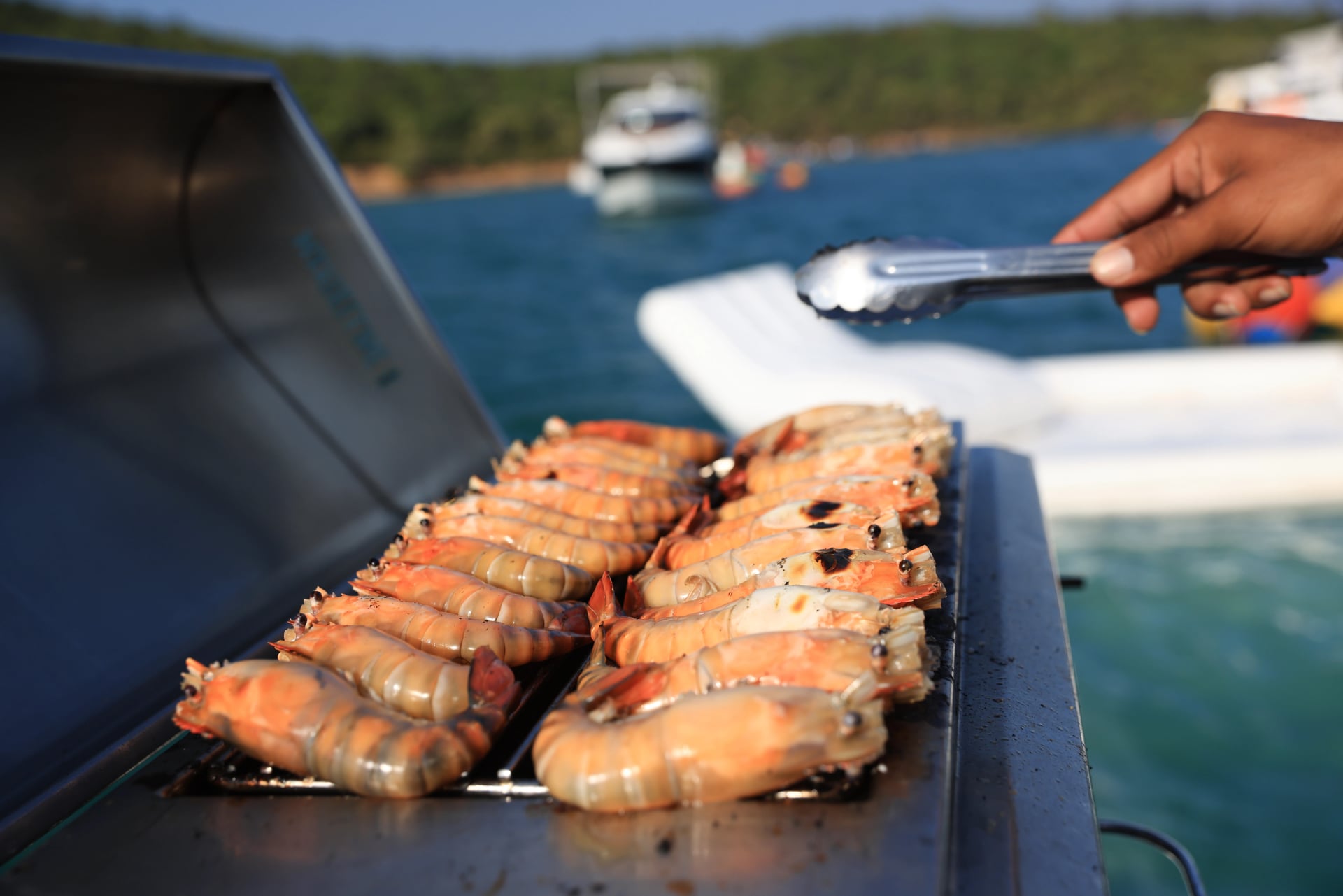
Grilling food, shrimp on a stove on a yacht
Dinner is less about location than tempo—shared plates, open conversations, and no reason to check the time

Dinner may unfold ashore at a waterfront taverna in Poros, Spetses, or Gaios, or privately on board beneath the stars. Greek evenings are social yet understated. Plates are shared, conversations stretch, and departures are unhurried.

Most itineraries alternate lively harbor nights with quieter anchorages, maintaining balance over the course of the week.

Top 10 Highlights of Yachting in Greece

Begin with one of four sample itineraries, then refine, expand, or completely reimagine the route to reflect how you prefer to experience Greece by sea.

Depending on the itinerary chosen, yachting in Greece will reveal very different landscapes, cultures, and moods. From volcanic calderas and medieval fortresses to turquoise island chains and neoclassical harbors, each route highlights a distinct side of the country’s maritime character.

The following highlights are among the most defining experiences encountered across Greece’s main yachting regions:

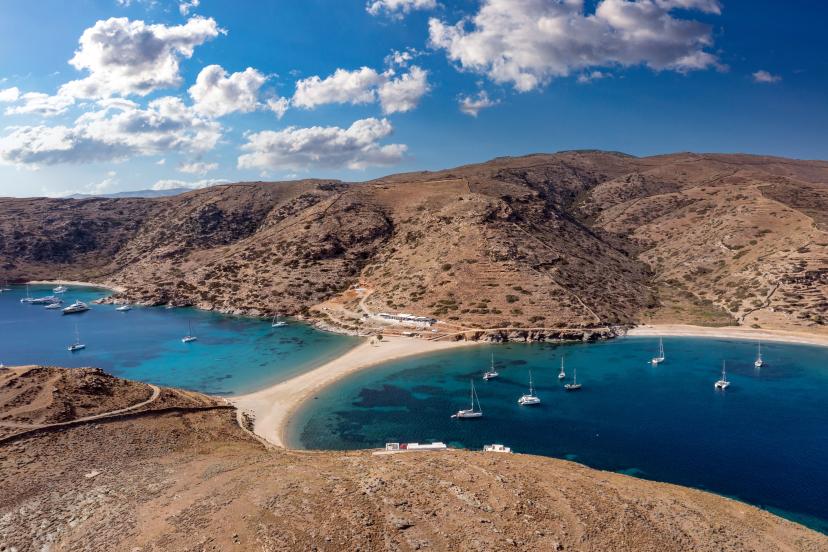
Kolona Fykiada double sided sandy beach, aerial drone view. Greece, Kithnos island, Cyclades.

Kolona Beach on Kythnos

Kolona is a rare double-sided sandbar connecting the main island of Kythnos with the islet of Agios Loukas, creating two contrasting swimming environments within a few meters. Yachts typically anchor just offshore in settled weather, with easy tender access to both sides of the beach. The shallow turquoise water and open horizon make it a popular daytime stop. Its unusual formation has made it one of the Cyclades’ most recognizable natural landmarks. Conditions often determine which side offers calmer water, adding flexibility to the stop.

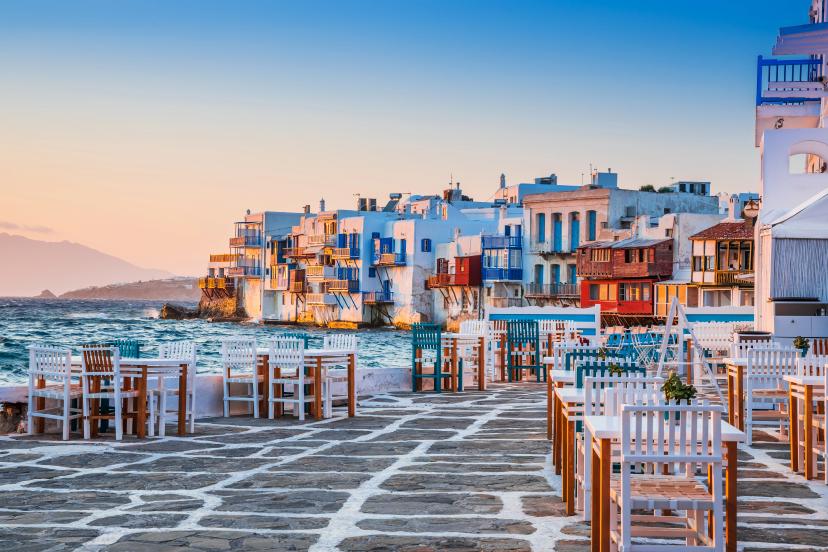
Mykonos, Greece. Waterfront in Little Venice, Mykonos at sunset.

Little Venice, Mykonos

Little Venice sits directly on the water’s edge, with historic houses and bars built over the sea on Mykonos’ western side. Arriving by yacht places guests within tender distance of waterfront terraces known for late-afternoon and sunset gatherings. The area faces prevailing winds but remains visually dramatic at golden hour. Its 18th-century merchant houses reflect Mykonos’ trading past before the rise of tourism. Evening visits combine lively atmosphere with direct proximity to the old town’s narrow lanes.

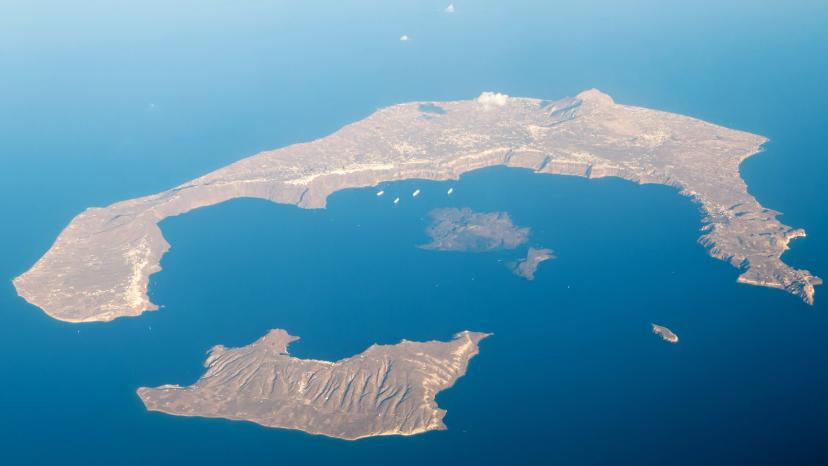
Santorini Island View

Santorini Caldera

Approaching Santorini by yacht reveals the full scale of the caldera, with vertical cliffs rising abruptly from deep water. Anchoring inside the caldera offers sheltered conditions and uninterrupted views of the volcanic rim and cliff-top villages. The contrast between dark volcanic rock and white architecture is most striking from sea level. The caldera was formed by one of the largest known volcanic eruptions in the Aegean around 1600 BCE. Early-morning or late-day arrivals provide the clearest light and the least traffic.

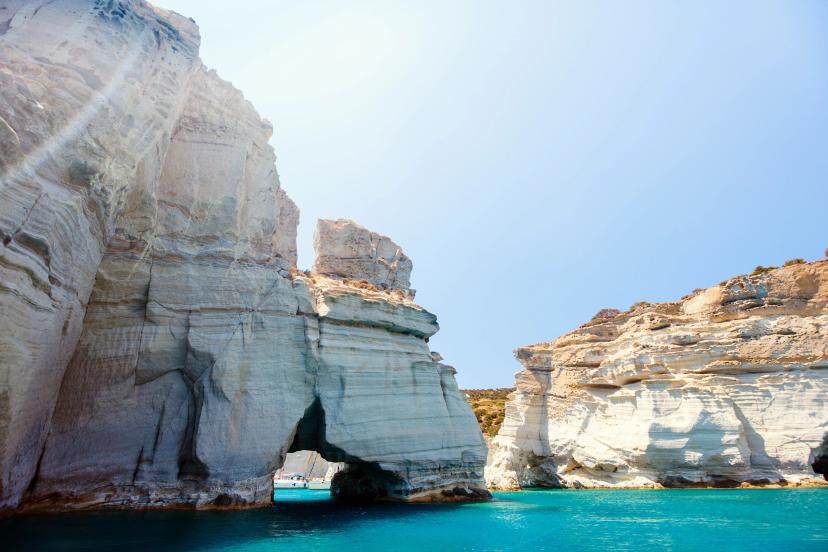
Kleftiko sea caves

Kleftiko Caves, Milos

Kleftiko is a series of white volcanic arches, caves, and sculpted rock formations accessible only by boat on Milos’ southwest coast. Yachts anchor nearby in calm weather, allowing guests to swim or tender through narrow passages of clear emerald water. The area is fully exposed to wind and swell, making timing and conditions important. Historically, the caves were used as hideouts by pirates operating in the Cyclades. When conditions align, it’s one of the most visually distinctive swimming stops in the region.

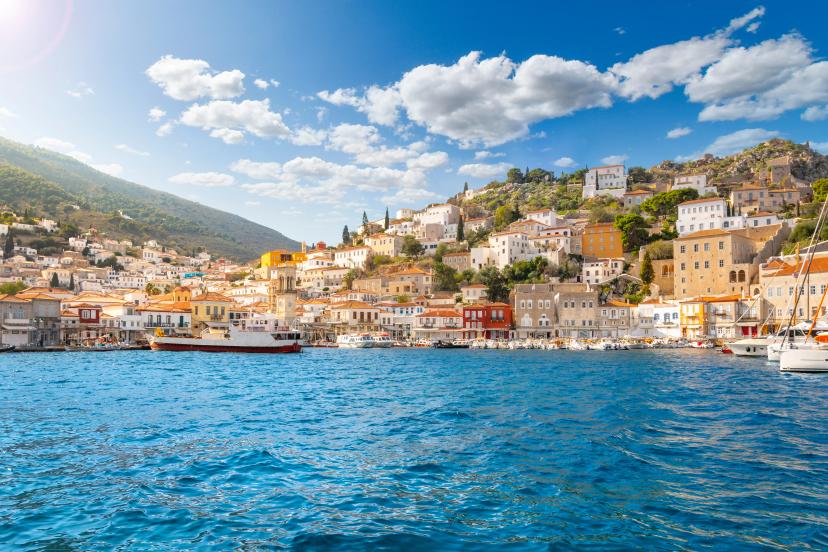
The harbor and port at the Greek island waterfront village of Hydra, one of the Saronic islands of Greece.

Hydra Harbor

Hydra’s horseshoe-shaped harbor provides a calm and highly scenic arrival, framed by neoclassical mansions and a dense waterfront promenade. The island is completely car-free, with movement limited to walking, donkeys, and water taxis. Mooring offshore places guests steps from cafés, galleries, and historic residences. Hydra became a major maritime power in the 18th century, a legacy still visible in its preserved harbor architecture. Evenings in the harbor tend to be relaxed and refined, with a slower rhythm than larger ports.

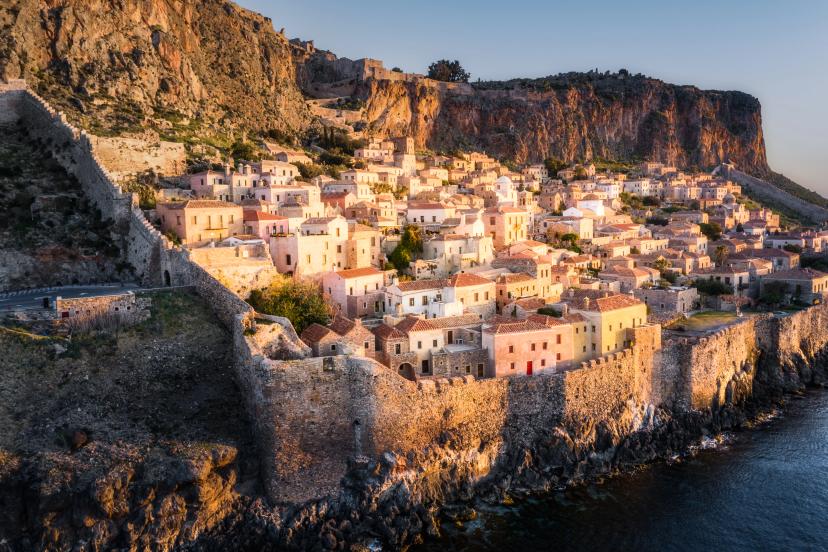
Aerial view of Monemvasia, Greece

Monemvasia Fortress

Monemvasia is a fortified medieval town built directly into a massive rock island connected to the mainland by a narrow causeway. Yachts typically anchor offshore, with tender access to the small harbor below the lower town. Stone lanes, churches, and sea-facing walls rise vertically from the water, giving the approach a dramatic, almost theatrical feel. The site was a major Byzantine stronghold from the 6th century onward, controlling sea routes through the southern Aegean.

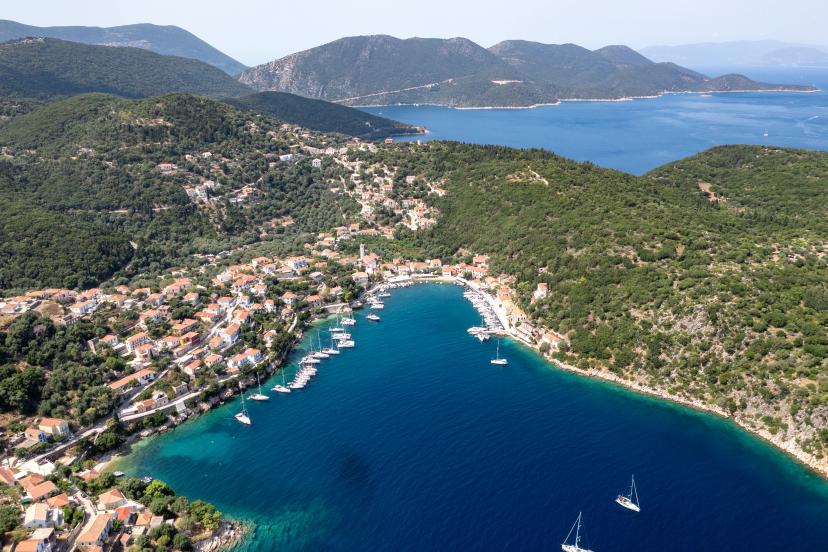
Aerial view of Kioni on the island of Ithaca

Kioni, Ithaca

Kioni is a small horseshoe-shaped harbor on Ithaca’s northeast coast, offering calm mooring conditions and an intimate village atmosphere. Stone houses and cafés line the waterfront, all within a short walk from the quay. The surrounding hills provide shelter from prevailing winds, making it a favored overnight stop. The village retains its traditional layout following post-earthquake reconstruction in the mid-20th century. Evenings are typically quiet and refined, with waterfront dining unfolding directly beside the moored yachts.

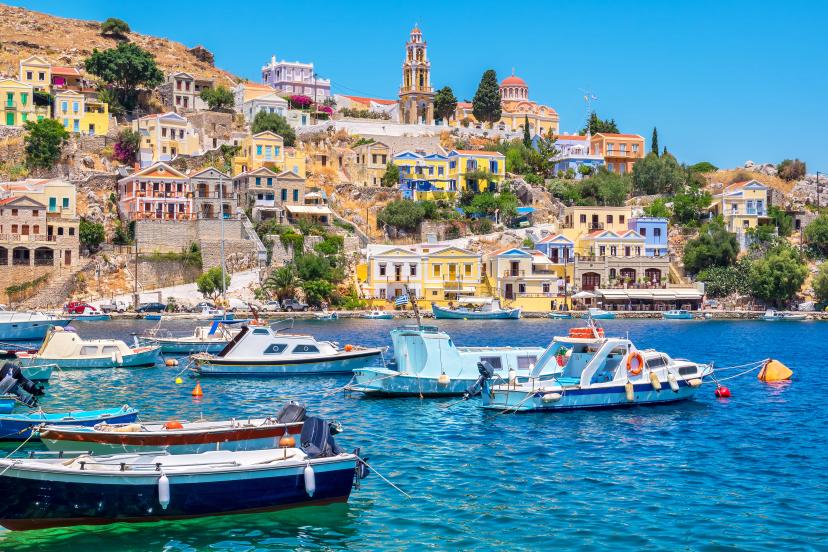
Symi Island waterfront. Greece

Symi’s Gialos Harbor

Gialos Harbor forms Symi’s main waterfront, where pastel neoclassical mansions rise steeply from the quay toward the upper town. Mooring stern-to places yachts directly in front of cafés, bakeries, and small shops. The setting feels compact and theatrical, especially when lit in the evening. Much of the architecture dates to Symi’s 19th-century shipping prosperity, carefully restored in recent decades. The harbor’s steep amphitheater layout gives arrivals a strong sense of arrival from the water.

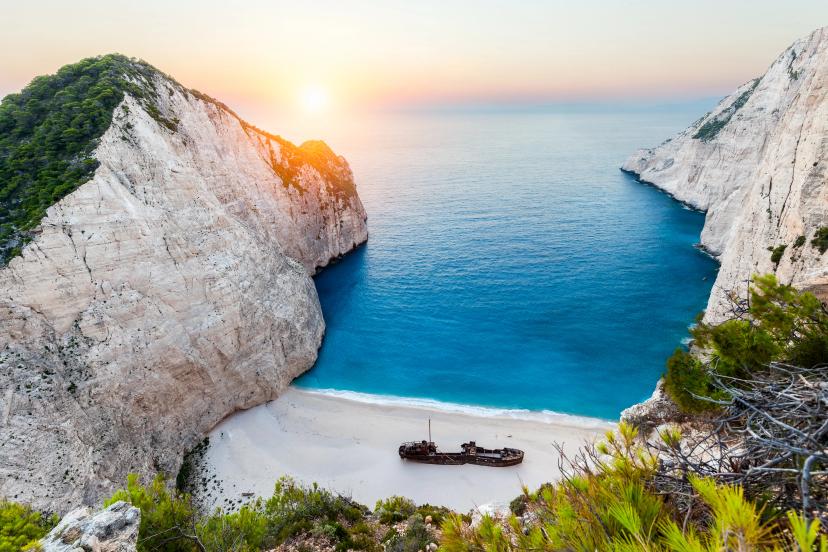
Navagio beach at sunset, Zakynthos, Greece

Navagio Beach, Zakynthos

Navagio Beach lies at the base of towering white limestone cliffs on Zakynthos’ northwest coast, accessible only by boat. Anchoring offshore allows for short swims or tender runs to the bright pebble shore and shallow turquoise water. The contrast between the enclosed cove and the open Ionian Sea makes the approach especially striking. The rusted shipwreck washed ashore in the 1980s and quickly became one of Greece’s most photographed landmarks. Visits are typically brief and weather-dependent due to exposure and heavy daytime traffic.

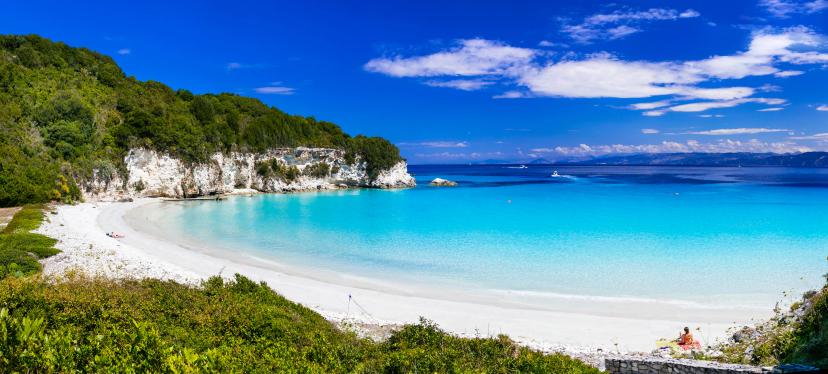
beautiful Ionian islands - Anti Paxos with turquoise beaches. Greece

Voutoumi Beach

Voutoumi is a wide, gently curving bay on Anti-Paxos, known for its exceptionally clear, light-blue water over pale sand. Yachts anchor offshore in settled conditions, with easy tender access for swimming and relaxed shore visits. The bay remains largely undeveloped, preserving a calm, natural atmosphere throughout the day. Its limestone seabed and minimal runoff contribute to some of the clearest water in the Ionian Sea.

No single itinerary covers everything, and that is precisely the appeal. Each route is designed around a specific rhythm—iconic scenery, quieter waters, cultural depth, or geological drama—ensuring that the highlights encountered feel coherent rather than rushed. The result is a yachting experience shaped as much by route selection as by the destinations themselves.

Routes That Shape the Experience

These highlights unfold naturally along established yacht itineraries such as:

Each route emphasizes a different side of Greece—iconic scenery, calmer waters, cultural depth, or geological drama.

The Essence of Greek Yachting

Yachting in Greece puts you in control of the day’s rhythm. Plans are flexible by design, shaped by mood, curiosity, and weather rather than fixed schedules. Explore our guide to Greek yachting weather to see how seasonal patterns shape cruising conditions, anchorages, and the rhythm of life at sea throughout the year.
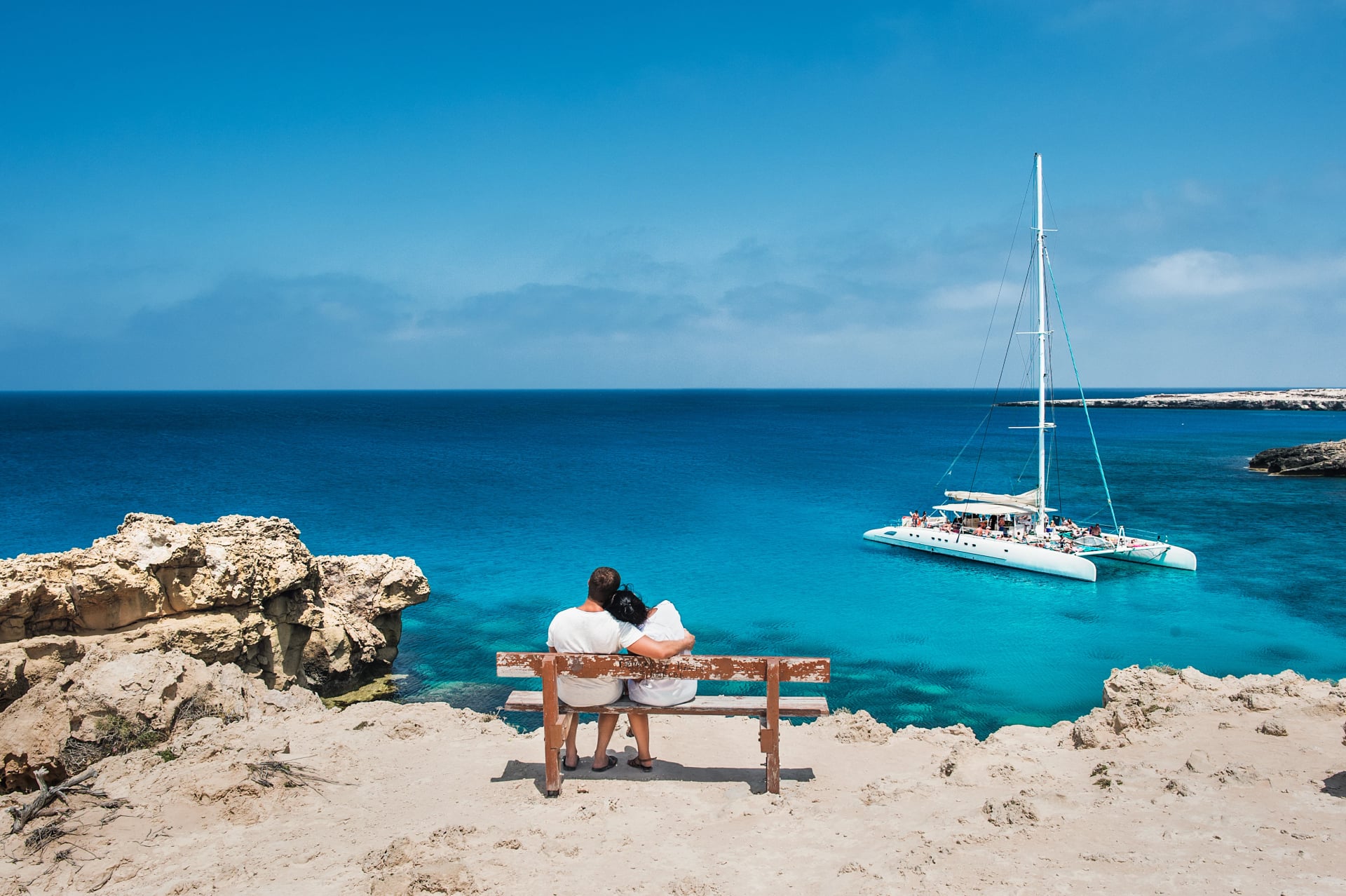
Loving couple sitting on a bench and looks at the lagoon. Honeymoon lovers. Man and woman on the island. Couple in love on vacation. A voucher for a cruise trip. Sea tour. Honeymoon trip. Cruise ship
Control is subtle in Greece - routes exist, but the day answers to mood, weather, and water

A quiet anchorage can turn into a full afternoon, or a spontaneous swim can become the highlight of the day. Routes adjust naturally, allowing each itinerary to evolve around your preferences rather than the other way around.

That continuity, paired with constant visual change, is what makes Greece one of the most enduring yacht destinations in the world. Contact us now and we will make sure that your luxury yacht charter runs on par with your daily plans.


Talk to our travel expert
Sail through Greece’s Aegean and Ionian waters, combining privacy, exclusivity, and luxury while discovering iconic islands and hidden bays.

Have questions? Talk to us.

Rene Gaspersic
Usually replies within 1 hour!
info@luxuryyachtgreece.com
+38668182363
WhatsApp
WhatsApp Us
Google ReviewsTripAdvisor Reviews
Portfolio brand of:World Discovery